


USA Stoneware Pottery | Baked Bean | Stew | Crock Pot
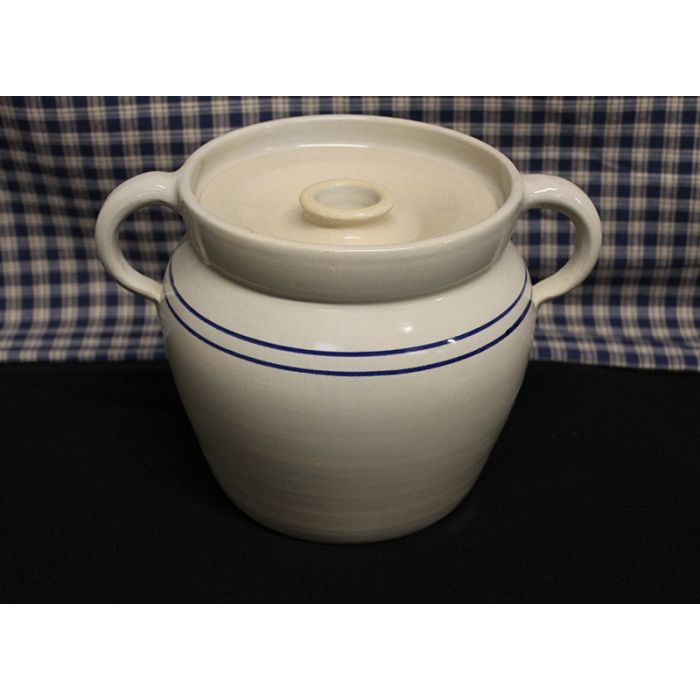
Our belly-style bean and stew crocks are perfect for baking up old-time recipes.
Convenient handles make it easy to transfer from the oven to the counter.
Stoneware is lead-free! Microwave-, Oven-, and Dishwasher-Safe. The pottery is durable and functional for everyday use.
Personalization and custom hand-painting options are available.
Read more below >
SKU
SKU-1714
$41.45
Description / USA Stoneware Pottery | Baked Bean | Stew | Crock Pot
Measuring 6” tall and 7” wide, these cylinder-style belly crocks cook evenly—the belly design and inset lid help reduce potential boilovers. Contents can be cooked with less water, and the remaining water provides steam that slowly cooks the beans to a more tender consistency. Meats simmered in a belly pot absorb heat that rises and exits through the top. This process breaks down the tissue, resulting in a tender, flavorful result that is not easily achieved in a traditional baking pan.
Holds approximately 2 quarts.
The standard color is priced in a white or blue stripe. You can select other colors using the drop-down menu at the top of the page. Some colors are hand-painted and signed by the artist. Please note: the rooster, red apple, and summer splendor design is a decal and is not hand-painted. The Poppy Seed design will feature flowers in both blue and peach, arranged on opposite sides of the stoneware.
See color samples in the click to enlarge pictures of various product examples. The white will match the cream color of the blue stripe. Depending on its position in the kiln, the actual white may range from cream to white, with a grayish hue or even a tan/beige cast—another characteristic of old-fashioned hand-turned pottery.
Stoneware can also be personalized for $12 via the drop-down menu at the top of the page. In the comment section at checkout, please leave us the name that you would like added. Personalized names and messages will be hand-painted.
The standard blue stripe may take 3-4 weeks to ship. Most colors, including white and personalized items, are custom-made to order and may take approximately 8 weeks to ship.
Stoneware Pottery is USA-made in Texas by a small family-owned and operated pottery company, which has been making quality pottery for over 22 years. Each piece is hand turned by a master potter, hand-painted or finished, and then coated with a lead-free glaze.
Because pottery is hand turned, dimensions may vary slightly. Stoneware pottery may also develop minor imperfections during firing and glazing. All food contact surfaces are inspected for such imperfections before shipping. The exterior may have imperfections that enhance the stoneware's character.
Lids for stoneware pottery are made the same way as the old ones and then fired. To fire them, some of the bottoms are left unglazed and will sit in the kiln. This is normal and does not stick during the process. The original lids were made the same way as those on antique crocks and churns.
To prevent cracking, Stoneware should be gradually heated as the oven reaches temperature, rather than being placed directly into a hot oven.
Product Attachments
Shipping Estimator
Estimate Shipping Calculator
Note : * Required Field(s) in the drop-down box options above must be selected to obtain a shipping estimate.
Alaska-Hawaii customers contact us. International Customers other than Canada, please use a US Forwarding Agent like MYUS.COM
Write Your Own Review